Plausible vs Fathom: Choosing a Privacy-First Analytics Tool
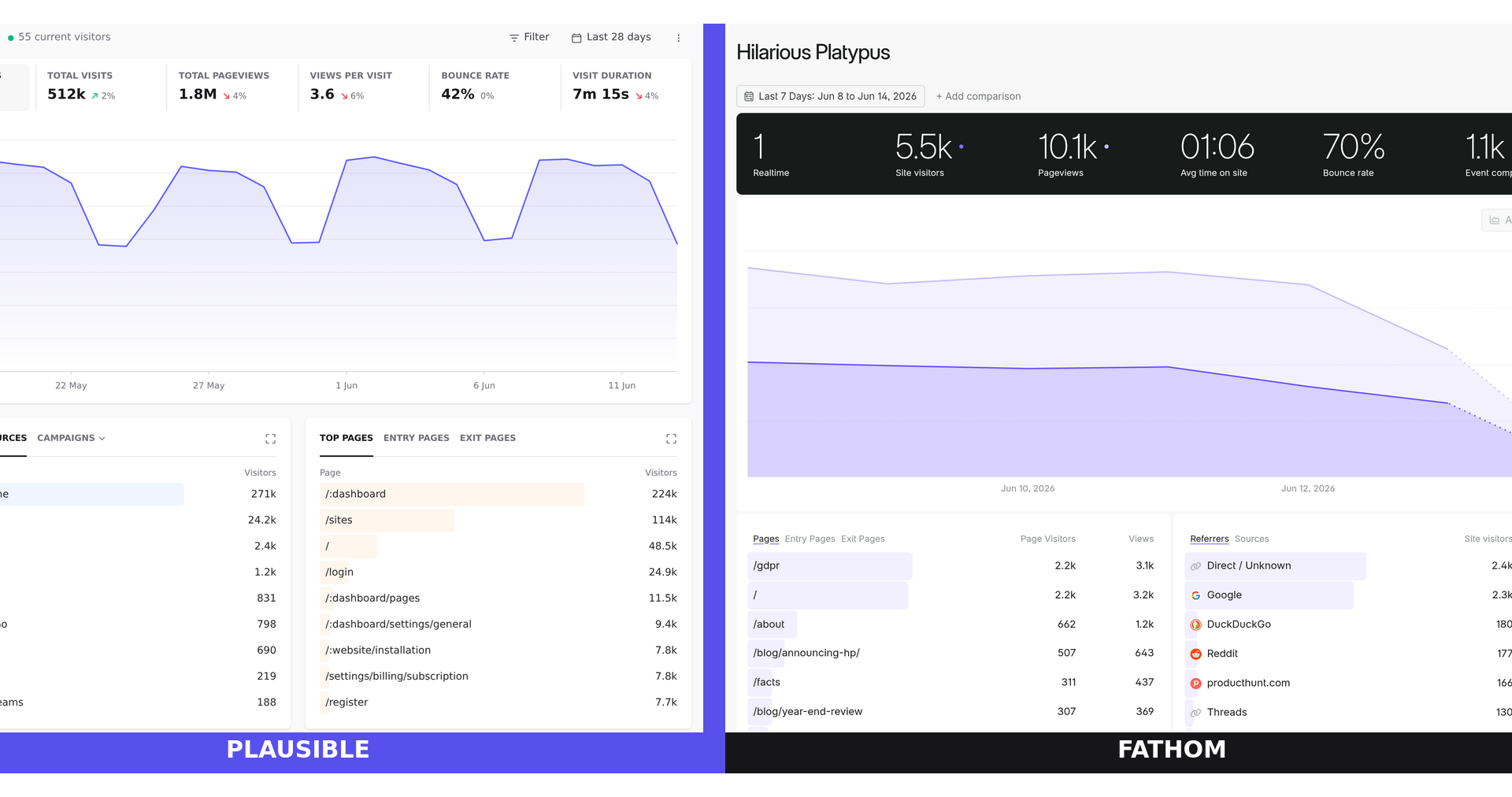
Plausible vs Fathom is the comparison I get asked about most. Both are privacy-first analytics tools, both ditch cookies, and both promise a Google-free dashboard you can actually read. So when a client tells me “just pick one for me,” I have to slow them down. These two tools look like twins from a distance, but the details matter — especially if you care about where your data lives and how much you’ll pay as your traffic grows.
I’ve set both up for real projects over the years. In this comparison, I’ll walk you through pricing, data handling, features, and the practical trade-offs, so you can choose the one that fits your site rather than the one with the louder marketing.
Plausible vs Fathom: Quick Comparison
Here’s the short version. If you want the reasoning behind each row, keep reading — I unpack all of it below.
| Feature | Plausible | Fathom |
|---|---|---|
| Entry price | $9/mo (10k pageviews) | $15/mo (100k pageviews) |
| Free tier | No (30-day trial) | No (7-day trial) |
| Cookieless | Yes | Yes |
| Consent banner needed | No | No |
| Open source | Yes | No |
| Self-hosting | Yes (Community Edition) | No |
| Data location | EU (hosted in Germany) | EU isolation option (Frankfurt) |
| Company base | EU | Canada |
| Script weight | < 1 KB | < 2 KB |
As you can see, the headline numbers tell two different stories depending on your traffic. Let me explain what each tool actually does well.
What Is Plausible?
Plausible is an open-source, lightweight analytics tool built in the EU. The script loads in under a kilobyte, which means it barely touches your page speed. Moreover, it collects no personal data and sets no cookies, so you skip the consent banner entirely under GDPR rules.
What sets Plausible apart, in my experience, is the open-source angle. The code is public on GitHub, and you can self-host the Community Edition on your own server for free if you’re willing to manage it. For most people, though, the hosted version is the sensible choice. It starts at $9 a month for 10,000 pageviews on a single site.
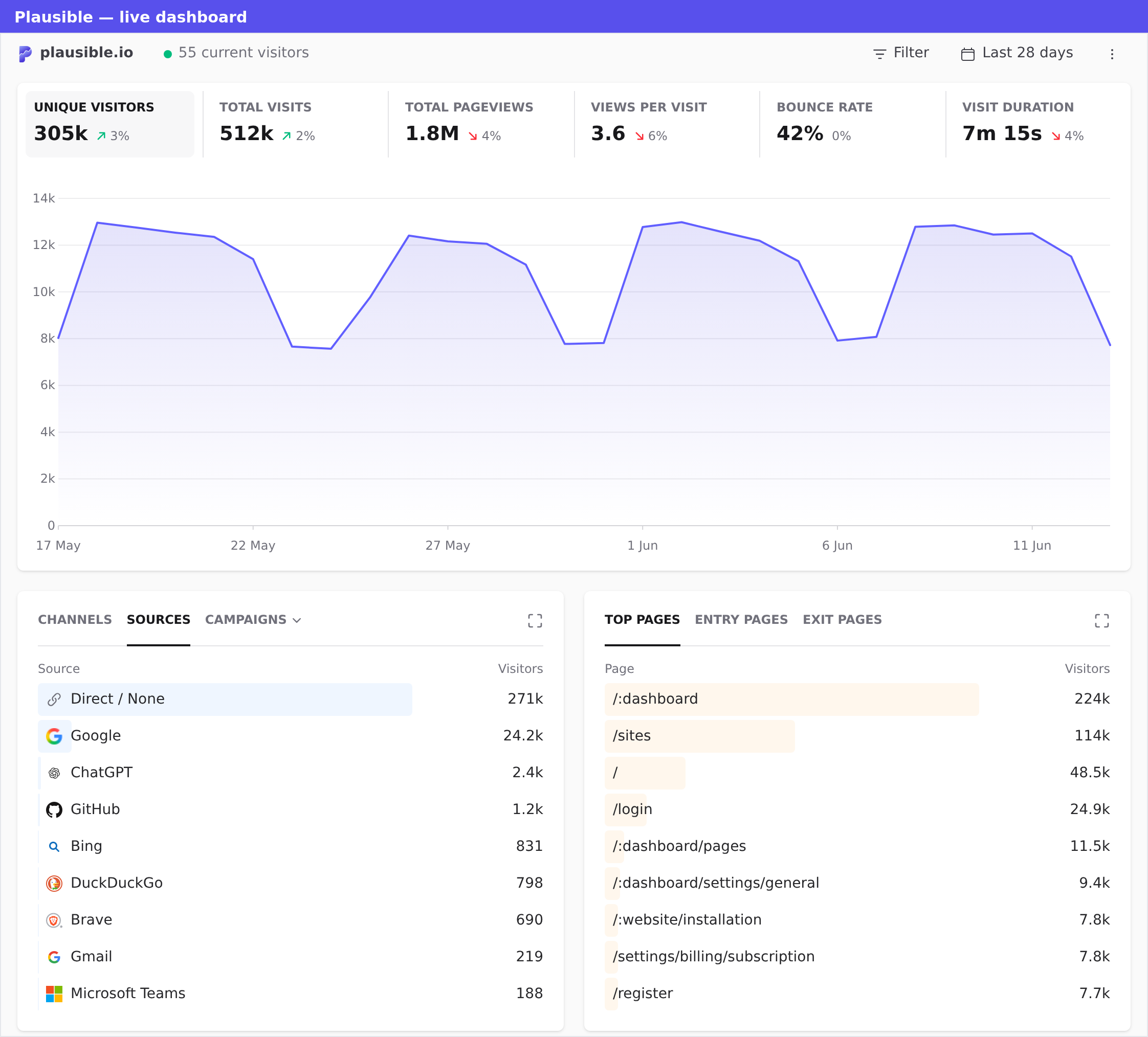
Plausible Pricing
Plausible uses four tiers, and the official pricing page lays them out clearly:
- Starter — $9/mo, one site, three years of data retention.
- Growth — $14/mo, up to three sites plus team members and shared dashboards.
- Business — $19/mo, adds funnels, revenue tracking, and the Stats API.
- Enterprise — custom pricing for large-scale needs and SSO.
Prices climb with your pageview volume, not just your plan. That said, yearly billing saves you two months, and every tier includes a 30-day trial with no credit card required.
What Is Fathom?
Fathom is a privacy-first analytics tool run by a small Canadian company. Like Plausible, it’s cookieless and needs no consent banner. The dashboard is clean, fast, and refreshingly simple — you won’t drown in metrics you don’t need.
Fathom’s standout feature is its EU isolation option. When you enable it, all your data is stored exclusively in Frankfurt, Germany, and never touches US servers. For European businesses worried about cross-border data transfers, this is a genuine selling point. I’ve recommended Fathom specifically for this reason to clients in regulated industries.
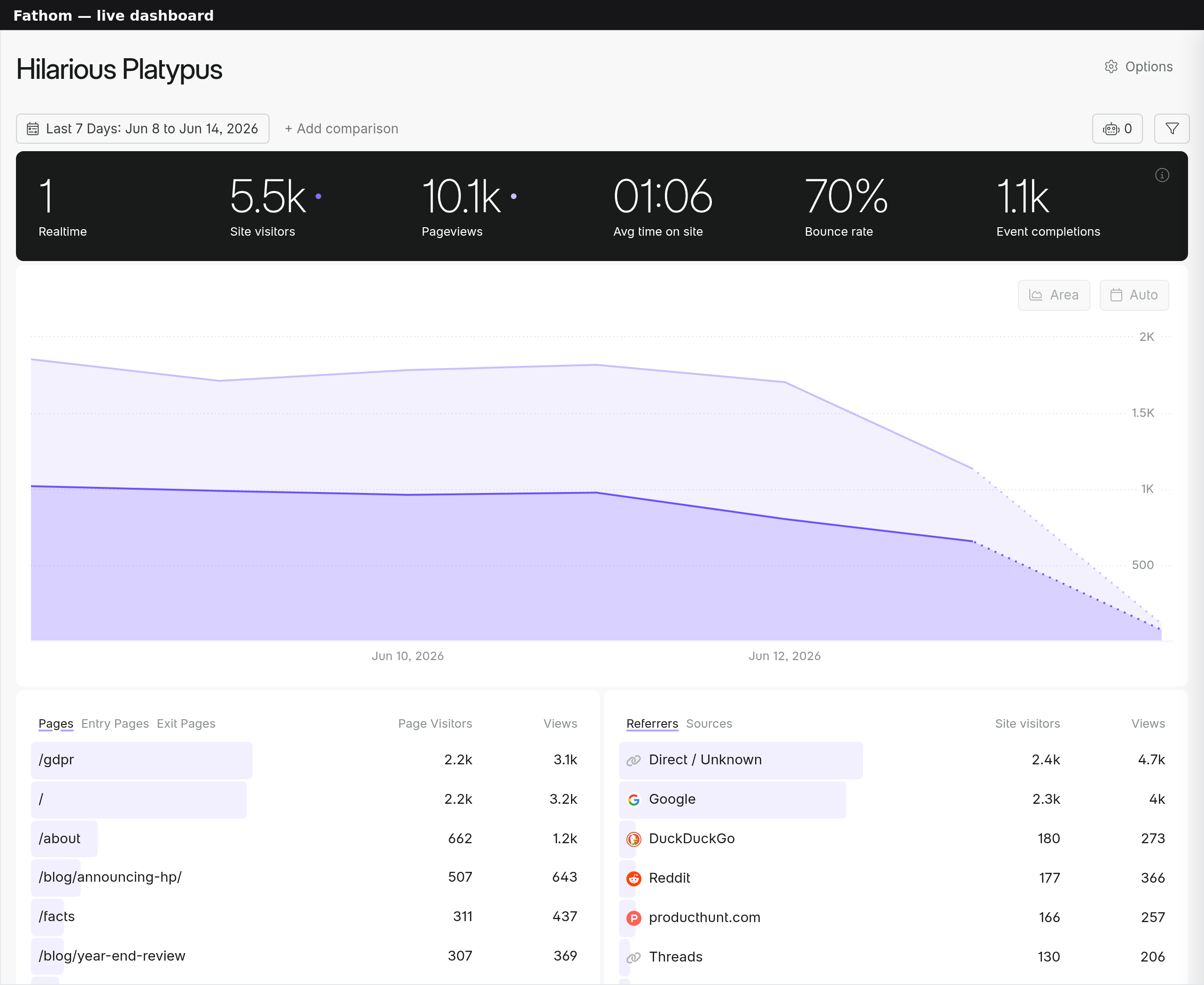
Fathom Pricing
Fathom keeps its pricing simple. The entry plan is $15 a month for up to 100,000 pageviews, according to the Fathom pricing page. Higher tiers scale with traffic. There’s a 7-day free trial, but no permanent free plan and no self-hosting option.
Notice the difference here. Fathom’s entry plan covers ten times the pageviews of Plausible’s cheapest tier. Consequently, the “more expensive” tool can actually be the cheaper one once your traffic grows past a small blog.
Plausible vs Fathom: Feature-by-Feature
Both tools cover the privacy basics identically. The differences show up in flexibility and control.
Privacy and Compliance
Neither tool sets cookies, and neither collects personal data, so both let you drop the consent banner. That alone makes either one a strong upgrade if you’re moving away from a heavier setup. For the bigger picture on this, see my guide to privacy-focused web analytics.
Where they diverge is control. Plausible’s open-source code means you can audit exactly what it does — or self-host it so the data never leaves your own infrastructure. Fathom counters with EU isolation, which gives you a managed guarantee about data location without the work of running a server yourself.
Data Ownership
This is the real decision point for most people. Do you want control or convenience?
- Choose Plausible if you value open source and the option to self-host. You can move your data onto your own server and own the whole stack.
- Choose Fathom if you want a hands-off managed service with a clear EU data promise and no infrastructure to babysit.
Dashboard and Metrics
Honestly, the dashboards feel similar. Both show you top pages, referrers, countries, devices, and goal conversions on a single screen. Plausible edges ahead on advanced features like funnels and the Stats API, but only on its Business tier. For a deeper read on traffic sources, my piece on direct traffic pairs well with either dashboard.
Which Should You Choose?
After setting up both for different clients, here’s how I’d decide.
Pick Plausible if: you run a small site and want the cheapest entry point, you care about open source, or you might want to self-host one day. The $9 starting price suits a personal blog or a single small business site.
Pick Fathom if: you have meaningful traffic and want the better pageview-per-dollar deal, or your top priority is a managed EU data guarantee. The 100,000-pageview entry tier is genuinely generous for a growing site.
For this reason, I never give a blanket answer. A 2,000-visit hobby blog and a 200,000-visit company site land on different tools, even though both owners asked the same question.
Common Mistakes When Choosing
I’ve watched people stumble on the same things repeatedly. Avoid these:
- Comparing prices without pageviews. “$9 vs $15” is meaningless until you map it to your actual traffic.
- Assuming you need self-hosting. Most people never use it. Don’t pick Plausible for a feature you’ll ignore.
- Ignoring the trial. Both offer 30 days free. Run your real site through each before you commit.
Frequently Asked Questions
Is Plausible or Fathom better for GDPR?
Both are GDPR-friendly out of the box, cookieless, and need no consent banner. Fathom’s EU isolation adds a managed data-location guarantee, while Plausible lets you self-host for full control. Either satisfies GDPR for typical use.
Can I switch from one to the other later?
Yes, but your historical data doesn’t transfer cleanly between them. Therefore, it’s worth testing both during their trials before you settle in for the long run.
Do either of them replace Google Analytics?
For most sites, yes. Both cover the metrics that actually drive decisions — traffic, sources, and conversions — without the privacy baggage or the steep learning curve.
Bottom Line
Plausible vs Fathom isn’t a case of one winner. Plausible wins on price for small sites and on openness for people who want to self-host. Fathom wins on pageview value at scale and on its managed EU data promise. Both are excellent, both respect your visitors, and both will serve you far better than a bloated, cookie-heavy alternative. Map the pricing to your real traffic, run both trials, and trust what you see. In my experience, that’s the only comparison that ever settles the question.